Garage Door Opener Repair
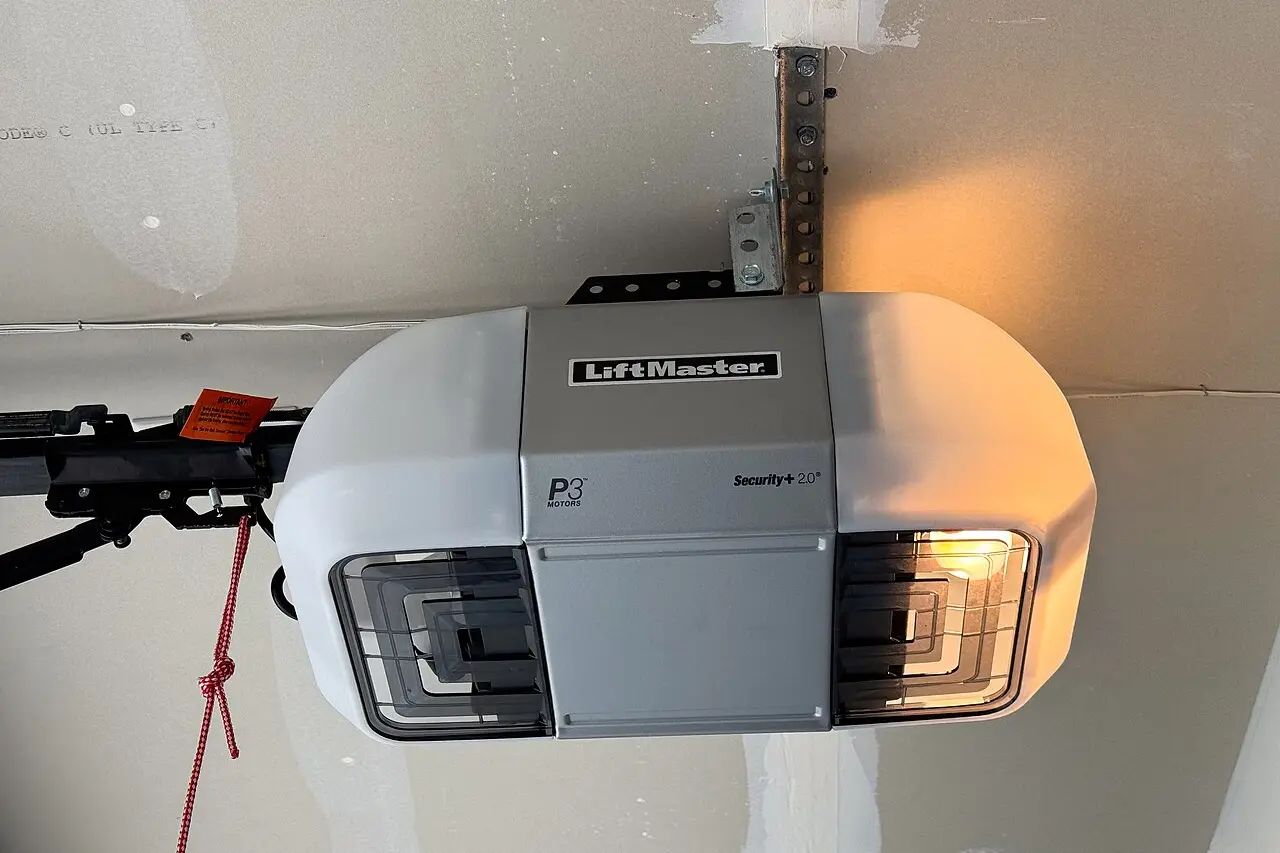
A garage door opener has a deceptively simple job — move a balanced door up and down on command — but inside the housing it is a small electromechanical system with a motor, a drive mechanism, a trolley and rail, travel switches or electronic limits, a logic board that interprets every input, a radio receiver for remotes and keypads, and two independent safety systems. When an opener misbehaves, the fault can live in any of those layers, or it can live outside the opener entirely, in a door that has become too heavy or too binding for any opener to move well. Opener repair begins by sepaspecification those possibilities, because replacing parts inside a healthy opener will never fix a door-side problem, and forcing a tired opener to haul a heavy door will destroy the new parts too.
The symptoms homeowners report are varied: a motor that hums and gives up, a unit that works from the wall control but ignores every remote, a door that starts down and reverses with the light flashing, a chain that slaps and sags, a light that works while the motor does not, or a system that runs the door straight into the floor or leaves it short of fully open. Each pattern points at a set of likely causes, and a methodical diagnosis — testing the door's balance first, then the drive, controls, and safety circuits in order — finds the real one. The goal is an opener that starts reliably, travels smoothly, stops where it should, and reverses promptly when either safety system is triggered.
First Question: Is It the Opener or the Door?
Every sound opener diagnosis starts with the red release handle. With the door closed, pulling the emergency release disconnects the trolley from the drive so the door can be lifted by hand. A door in good balance lifts with modest effort and stays near halfway when released. If it slams down, will not stay up, or needs a hard pull to move, the problem is in the springs, cables, rollers, or tracks — and the opener has been compensating, or failing to compensate, for a door problem. Repairing the opener in that state is wasted work; the door is corrected first, then the opener is judged on a fair load.
If the door balances well by hand, attention turns to the opener itself. The technician watches a full cycle, listens for grinding or clicking from the housing, notes where the trolley stops, and reads the diagnostic flashes many units show on their learn button or light lens. A door that stops at the same point every cycle suggests a limit or sensor issue; a door that stops at random points suggests power, board, or motor trouble. This sequence — door first, then drive, then electronics — prevents the common error of condemning an opener that was only ever reporting a door fault through its safety behavior.
- Emergency release test separates door faults from opener faults
- A balanced door lifts easily by hand and holds at mid-travel
- Stopping at the same point each cycle points to limits or sensors
- Random stopping points toward motor, board, or power supply issues
- Diagnostic light flashes narrow the fault before parts are opened
Drive System Failures: Gears, Chains, Belts, and Trolleys
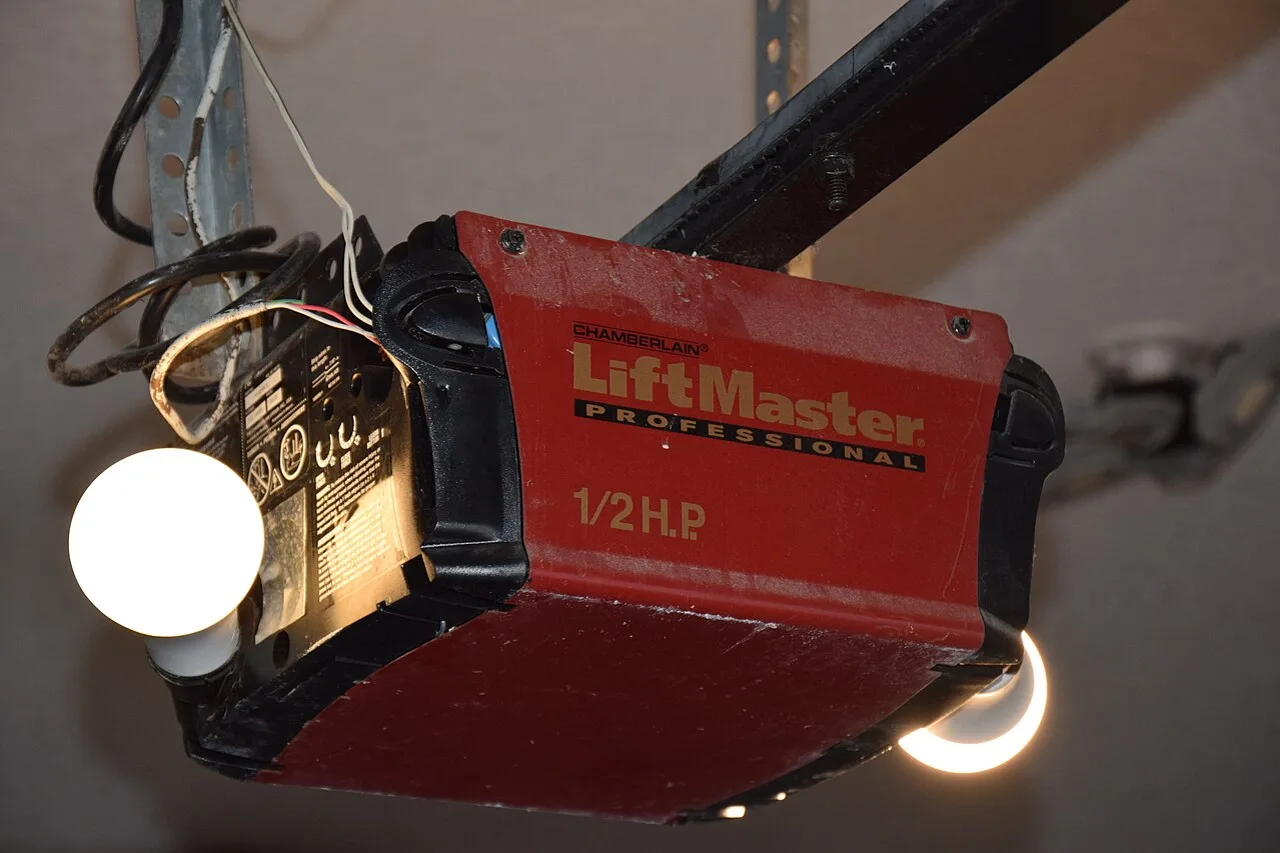
Inside chain and belt drive units, the motor turns a sprocket or pulley through a gearbox, and the part that most often sacrifices itself is the main drive gear, commonly a nylon or composite gear meshing with a steel worm gear on the motor shaft. Years of load, especially hauling a door heavier than it should be, wear the gear teeth down until the motor spins, hums, or grinds while the sprocket barely moves. Homeowners sometimes find white shavings inside the housing — the remains of the gear. Replacing the gear assembly, with fresh lubricant and a check of the worm gear and bushings, restores drive, provided the door's weight problem that wore it out is corrected at the same time.
Outside the housing, the drive line tells its own story. A chain should run with modest slack; a chain hanging in a deep catenary curve slaps the rail, jumps teeth, and signals stretched chain or a moved tensioner. Belts rarely stretch but their trolley teeth and pulleys wear. The trolley and carriage that connect the drive to the door arm can crack, wear their engagement teeth, or travel without latching after the release has been pulled. Screw drive units move their trolley along a rotating threaded rod, and their failures center on worn trolley threads and dried lubricant making the unit loud and slow in cold weather. Each drive type has its own wear parts, and a repair visit identifies the drive first so the inspection follows the right list.
- Worn main drive gear: motor hums, white shavings appear in the housing
- Excess chain slack causes slapping, jumping, and uneven travel
- Trolley engagement checked after any use of the emergency release
- Screw drive noise and slowness often trace to trolley threads and lubricant
- Gear wear caused by a heavy door returns unless balance is corrected
Controls, Remotes, Keypads, and Logic Boards
When the wall control works but remotes do not, the fault sits in the radio path. The simple checks come first — remote batteries, a keypad battery, whether one remote works while another does not — then the receiver itself. Modern openers use rolling code technology, and remotes occasionally lose their pairing after power events or board issues; re-pairing through the learn button resolves those cases. Persistent failure across all remotes after re-pairing points to the receiver section of the logic board, and outside interference — certain LED bulbs fitted in the opener are a notorious source — can flood the radio band and shrink remote range to a few feet, a clue that appears when remotes work only when very close to the unit.
The logic board is the opener's brain, and its failures are broader: relays that click without starting the motor, solder joints cracked by years of vibration, and surge damage from lightning or grid events that leaves the unit dead, erratic, or running the door without command. A door that opens by itself should always be treated seriously and the unit left disconnected until diagnosed. Board replacement is matched to the exact model and frequency family, and after fitting, all remotes and keypads are re-paired, limits are set fresh, and safety systems are retested, because the board holds the settings that govern travel and force. Surge protection for the replacement board is a sensible part of the same conversation.
- Wall control works, remotes do not: radio receiver or pairing fault
- Short remote range can be caused by interference, including some LED bulbs
- Rolling code remotes are re-paired through the learn button sequence
- Self-opening doors point to board failure and need prompt attention
- New boards require full re-setup of limits, force, and all controls
Safety Sensors and Auto-Reverse Problems
Since the early nineteen-nineties, residential openers sold in the United States have been required to include photo-eye sensors, and no opener repair is complete without proving both safety systems work. The photo-eyes mount a few inches above the floor on each side of the opening and pass an invisible infrared beam between them. If the beam is broken while the door is closing — by a child, a pet, a bicycle, anything — the opener must reverse the door. When sensors are dirty, knocked out of alignment, sun-blinded, or suffering a nicked wire, the opener refuses to close the door from a remote, the lights flash, and holding the wall button becomes the only way down. That behavior is the system working as designed, reporting a safety fault rather than a motor fault.
The second system is contact reversal: if the closing door meets solid resistance, it must reverse within moments. This is governed by the force settings, which is why force is never a cure for a heavy or binding door — raising the force to push a bad door closed also raises the force the door will apply to an obstruction before reversing. During repair, the technician cleans and aligns the sensors, confirms each sensor's indicator shows a solid beam, breaks the beam mid-close to prove reversal, and tests contact reversal with a board laid flat on the threshold. A unit that fails either test, or an older unit that predates photo-eyes entirely, changes the conversation from repair toward the safety case for a modern replacement unit. Call Now to connect with a local garage door professional.
- Photo-eyes must reverse a closing door when the beam is broken
- Flashing lights with refusal to close usually report a sensor fault
- Sensor wiring is checked along the wall and at the motor head terminals
- Force settings are never raised to overcome a heavy or binding door
- Both beam reversal and contact reversal are proven before the visit ends
Limits, Travel, and Force: The Settings Behind Odd Behavior
Many opener complaints are setting problems wearing the disguise of breakdowns. Travel limits tell the unit where fully closed and fully open are. If the down limit drifts or was set for a door that has since changed — a new bottom seal, a settled floor, replaced springs — the door may stop short and reverse as if it hit something, or drive into the floor until the rail bows. If the up limit is off, the door leaves a gap at the top or slams into the stops. Electronic limit systems learn these points during setup; mechanical systems use dials or screws on the housing. Either way, limits are set with the door in its repaired, balanced state, and reset again after any spring or cable work.
Force settings sit alongside limits and are routinely misunderstood. Force is the threshold at which the opener decides it has met an obstruction. Set too low for the door's real resistance, the door reverses mid-travel on a cold morning when lubricant thickens. Set too high, the door becomes hazardous. Temperature swings, seasonal track movement, and gradual spring fatigue all shift a door's resistance over the year, which is why a unit that reversed randomly may need door service and a careful force calibration rather than new electronics. A thorough repair visit measures how the door actually moves, then sets limits and force to that reality and verifies with full cycles in both directions.
- Down limit faults make doors stop short, reverse, or press into the floor
- Up limit faults leave top gaps or cause hard stops at full open
- Limits must be reset after spring, cable, or seal changes
- Force is an obstruction threshold, not a power boost for heavy doors
- Seasonal changes in resistance explain many intermittent reversals
How the Work Usually Proceeds
Share the Opener's Behavior
Note what the unit does: sounds it makes, whether the wall control works when remotes do not, how the lights flash, and where the door stops. Photographing the model label on the motor head, if you can do so safely from a step stool without touching wiring, helps the professional bring matching gears, boards, and trolleys.
Door Balance and Opener Diagnosis
The visit starts with a manual balance test of the door itself, then moves through drive parts, controls, sensors, and settings in order. You receive a clear separation between door repairs the opener needs and opener repairs themselves, so nothing is replaced on guesswork.
Repair, Re-pair, and Recalibrate
Worn gears, trolleys, sensors, or boards are replaced with parts matched to the model. Remotes and keypads are re-paired, travel limits are set to the door's true endpoints, and force is calibrated to the repaired door rather than cranked up to mask resistance.
Full Safety Verification
The finished system is proven, not assumed: several full cycles, a beam-break reversal test at the photo-eyes, a contact reversal test at the floor, and a check of the emergency release. You see each test performed and know exactly what correct operation looks like.